

The Caiaphas Ossuary

Archaeological Evidence Affirming Biblical Truth and the Crucifixion of Jesus
In the annals of biblical archaeology, few discoveries bridge the gap between ancient artifacts and scriptural accounts as profoundly as the Caiaphas Ossuary. Unearthed in 1990 during construction work in Jerusalem's Peace Forest, this limestone bone box has provided tangible evidence for a key figure in the New Testament narrative.
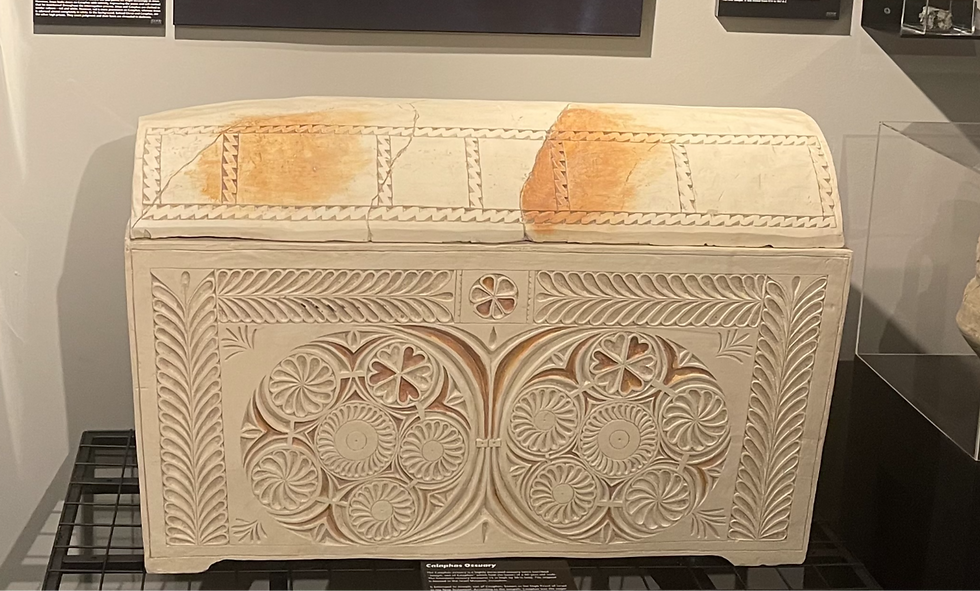
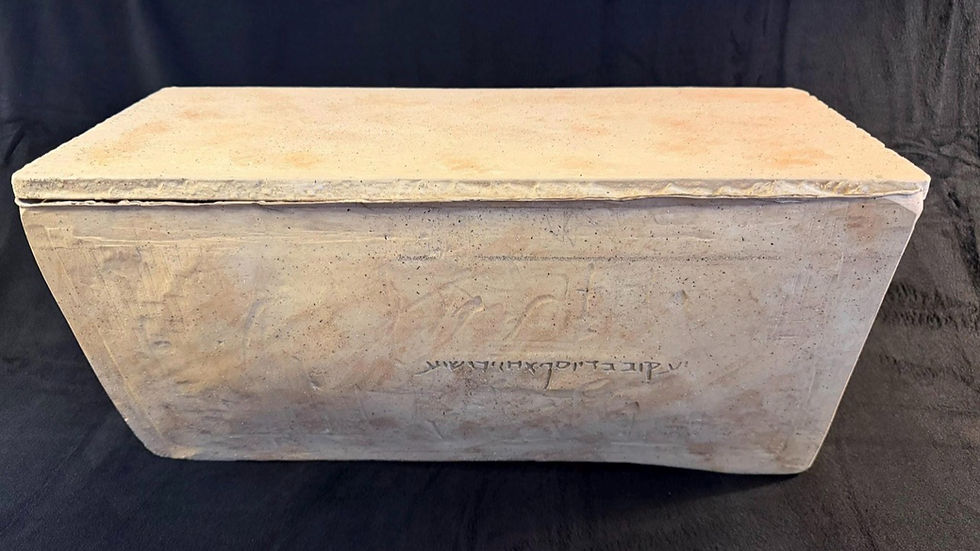
Inscribed with "Yehosef bar Qayafa" – translated as "Joseph son of Caiaphas" – the ossuary is widely believed to belong to the High Priest Caiaphas, who played a pivotal role in the trial and crucifixion of Jesus Christ. This find not only authenticates the historical existence of Caiaphas but also bolsters the reliability of the Gospel accounts surrounding Jesus' Passion.
Discovery and Description of the Ossuary
The ossuary was found in a first-century burial cave containing twelve bone boxes, six of which were intact. Among them, one stood out for its ornate decorations, featuring intricate rosettes and floral motifs carved into the limestone. The inscription, written in Aramaic, identifies it as belonging to "Joseph son of Caiaphas," aligning with historical records from Jewish historian Josephus, who refers to the High Priest as Joseph Caiaphas. Scientific analysis of the bones inside revealed those of a 60-year-old male, consistent with the age of Caiaphas during his tenure as High Priest from 18 to 36 AD.
Dating to approximately 20-60 CE, the ossuary reflects Jewish burial practices of the Second Temple period, where bodies were first laid in tombs to decompose, then the bones were collected in ossuaries for secondary burial. The tomb's contents, including pottery and a coin from Herod Agrippa (37-44 AD), confirm its first-century origin. This discovery was accidental, yet it has proven invaluable, offering a direct link to the era of Jesus.
Caiaphas in the Biblical Narrative
In the Gospels, Caiaphas emerges as a central antagonist in the events leading to Jesus' crucifixion. As High Priest, he convened the Sanhedrin to plot against Jesus, famously declaring, "It is better for you that one man die for the people than that the whole nation perish" (John 11:50). This statement, interpreted by the Gospel writer as unwitting prophecy, foreshadowed Jesus' sacrificial death. Caiaphas presided over Jesus' nighttime trial, where false witnesses were sought, and ultimately handed Him over to Pontius Pilate for execution (Matthew 26:57-68; John 18:13-24).
The ossuary's confirmation of Caiaphas' existence validates these accounts. Josephus corroborates his role as High Priest under Roman prefects, including Pilate, further aligning historical and biblical records. Scholars note that Caiaphas' anger over Jesus' cleansing of the Temple – evicting money changers – was a key catalyst for the crucifixion plot. By unearthing his remains, archaeology provides physical proof that the figures in the Passion story were real historical persons, not mere literary inventions.
The Ossuary's Demonstration of Biblical Validity
The significance of the Caiaphas Ossuary extends beyond mere identification; it underscores the historical accuracy of the New Testament. Discoveries like this challenge skeptics who dismiss the Gospels as myth or legend. As one scholar remarked, it offers "great new insight into the period during which Jesus lived," affirming the socio-political context of first-century Judea. The ossuary strengthens the case for the crucifixion's historicity, as Caiaphas was instrumental in orchestrating the events leading to Jesus' death on the cross.
Moreover, related finds, such as an ossuary possibly belonging to Caiaphas' granddaughter Miriam, highlight the familial and priestly lineage, echoing biblical references to the High Priest's household. These artifacts collectively paint a picture of a verifiable world where the drama of redemption unfolded.
Conclusion: From Crucifixion to Resurrection – A Comforting Assurance
The Caiaphas Ossuary stands as a testament to the truth of the Biblical narrative, confirming the existence and role of a key player in Jesus' trial and crucifixion. If the events surrounding the crucifixion are historically validated through such archaeological evidence, it is logical to conclude that the accounts of Christ's resurrection are equally true. This resurrection – the cornerstone of Christian faith – offers eternal hope and comfort to all believers, assuring us that death has been defeated and life everlasting awaits.
Comments