

The Stones of the Breastplate and the Tribes of Israel

Updated: Aug 17
The Stones of the Breastplate and the Tribes of Israel
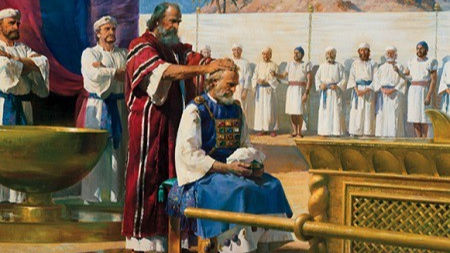
In Exodus 28 the Lord commanded that twelve precious stones be set in four rows upon the breastplate of judgment worn by Aaron the high priest. Each stone was to be engraved with the name of one of the twelve tribes of Israel, so that the high priest would “bear the names of the sons of Israel in the breastpiece of judgment upon his heart… for a continual remembrance before the Lord” (Exodus 28:29).
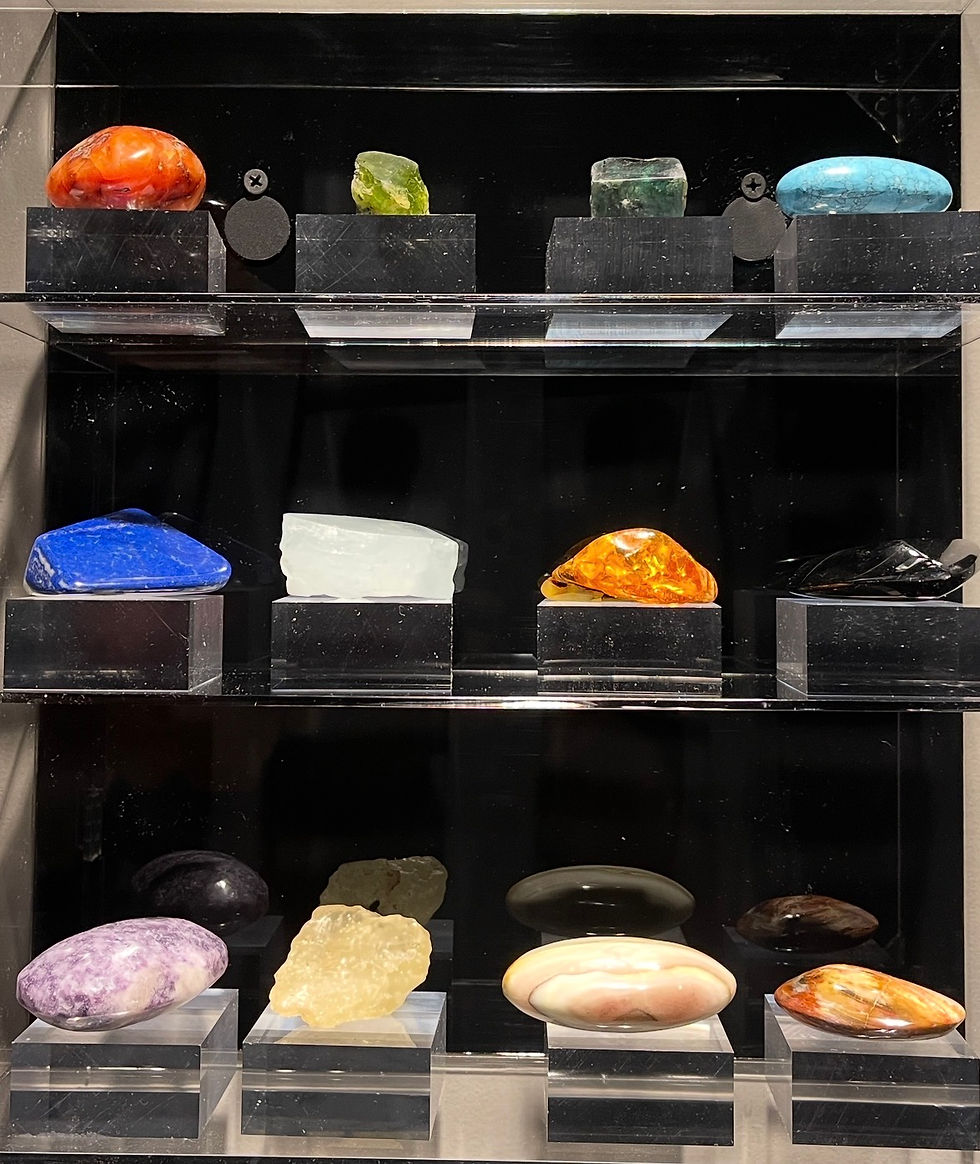
The Hebrew names of the stones are fixed in Scripture. Their mineral identities follow the conclusions presented in “The Breastplate of Aaron.”
’Ōdem — Red variety of silicon dioxide (carnelian / sard)
Piṭdāh — Olivine / peridot
Bāreqet — Emerald
Nōpeḵ — Turquoise
Sappîr — Lapis lazuli
Yāhălōm — Aquamarine (blue variety of beryl)
Lešem — Amber
Šəḇô — Black agate
’Aḥlāmāh — Amethyst
Taršîš — Libyan desert glass
Šōham — Green onyx
Yāšpēh — Red jasper

These identifications remain constant throughout the analysis that follows.
Primary Assignment: Birth Order
The dominant traditional view, reflected in Rashi and the Talmud (Sotah 36a–b), holds that the stones followed the birth order of the sons of Jacob. This produces the following pairing:
First Row
’Ōdem (Carnelian) — Reuben
Piṭdāh (Peridot) — Simeon
Bāreqet (Emerald) — Levi
Second Row
Nōpeḵ (Turquoise) — Judah
Sappîr (Lapis lazuli) — Dan
Yāhălōm (Aquamarine) — Naphtali
Third Row
Lešem (Amber) — Gad
Šəḇô (Black agate) — Asher
’Aḥlāmāh (Amethyst) — Issachar
Fourth Row
Taršîš (Libyan desert glass) — Zebulun
Šōham (Green onyx) — Joseph
Yāšpēh (Red jasper) — Benjamin
The Traditional Banner Colors
Numbers 2 describes the arrangement of the tribes around the Tabernacle but does not specify the appearance of their banners. That information comes from Numbers Rabbah (Bamidbar Rabbah) 2:7. The Midrash states that the color of each tribe’s banner matched the color of its stone on the High Priest’s breastplate. The traditional colors are:
Reuben — Red
Simeon — Green
Levi — One-third white, one-third black, one-third red
Judah — Sky-blue (color of the heavens)
Issachar — Dark blue / bluish-black
Zebulun — White
Dan — Sapphire-like blue
Gad — Blend of black and white (gray)
Naphtali — Wine-color / pale reddish wine
Asher — Pearlescent (color of a precious stone used for adornment)
Joseph — Jet-black
Benjamin — Combination of all twelve colors

Correlation Between Stones and Banner Colors
When the birth-order assignment is paired with the mineral identifications above, several strong color correlations appear, along with some notable mismatches:
Reuben (Carnelian) matches the Midrashic red perfectly.
Simeon (Peridot) matches the Midrashic green well.
Judah (Turquoise) aligns closely with the sky-blue banner.
Dan (Lapis lazuli) corresponds excellently to the sapphire-like blue.
Asher (Black agate) offers a dark, banded appearance that can reasonably relate to more subdued or mixed traditional descriptions.
Benjamin (Red jasper) can be seen as contributing to the multi-colored banner.
Weaker or mismatched pairings include:
Levi (Emerald) versus the tricolor (white-black-red) banner.
Naphtali (Aquamarine) versus wine-color.
Gad (Amber) versus gray (black-and-white blend).
Joseph (Green onyx) versus jet-black.
Zebulun (Libyan desert glass / golden) versus white.
These discrepancies do not invalidate the birth-order tradition, but they do invite consideration of alternative tribal sequences that would improve the overall color harmony between stones and banners.
Possible Variations That Improve Color Correlation
Several traditional alternative arrangements exist. Adjusting the tribal order while keeping the stone sequence fixed can produce better alignment with the Midrashic banner colors:
Maternal Grouping (Leah’s sons first, then the handmaids, then Rachel’s) This moves Issachar and Zebulun higher and shifts some of the handmaid tribes. It improves the placement of darker or multi-toned stones relative to tribes whose banners are described as dark or mixed.
Camp / Marching Order (Numbers 2) Placing the eastern camp (Judah–Issachar–Zebulun) first brings the sky-blue, dark-blue, and white banners into the early rows. Pairing Judah with turquoise becomes especially natural under this system.
Color-Optimized Considerations Without abandoning traditional constraints entirely, one could prioritize the strongest color matches:
Keep Reuben with carnelian (red) and Simeon with peridot (green).
Assign Judah to turquoise (sky-blue) and Dan to lapis lazuli (sapphire-blue).
Note that black agate (stone 8) provides a distinctly dark option that could suit tribes whose banners are described as black, gray, or mixed.
Assign the multi-colored or variegated stones (black agate, red jasper) toward Benjamin or Gad.
Such approaches remain speculative, but they illustrate how the Midrashic emphasis on color correspondence could have influenced later understandings of the breastplate order.
Conclusion
Using the precise stone identifications concluded in “The Breastplate of Aaron”—including the explicit determination that šəḇô was agate of a black variety—the most secure traditional assignment remains the birth order of Jacob’s sons. When this arrangement is compared with the banner colors preserved in Numbers Rabbah 2:7, several strong and satisfying correlations emerge—particularly for Reuben, Simeon, Judah, and Dan—while other pairings show less immediate harmony.
The existence of alternative tribal sequences in Jewish tradition allows for constructive exploration of arrangements that would strengthen the color link between breastplate and banner. Yet across every variation, the deeper purpose remains unchanged: twelve distinct stones, each bearing the name of a tribe, were set upon the heart of the high priest and carried into the presence of the Lord. Whether ordered by birth, by mother, by camp, or by color, the memorial function was the same. Every tribe of Israel was known, remembered, and represented before the God who called them by name.

Comments