

Nimrod the Mighty Hunter

Updated: Mar 28
COMING SOON
Biblical History Confirmed as Sargon the Great of Akkad
In the wake of the global Flood that judged a wicked world, God commanded Noah’s descendants to “be fruitful and multiply and fill the earth” (Genesis 9:1). Yet, as recorded in the authoritative historical record of Genesis 10—the Table of Nations—humanity quickly turned to rebellion once more. Amid this post-Flood repopulation stands one of Scripture’s most striking figures: Nimrod, the great-grandson of Noah through Ham and Cush. Far from a mythical legend, Nimrod was a real man whose life and empire are now powerfully confirmed by archaeology and ancient inscriptions. The evidence overwhelmingly identifies him as Sargon the Great of Akkad, history’s first empire-builder. This remarkable connection stands as yet another confirmation that the Bible is not ancient myth, but precise, trustworthy history—exactly as the Flood Museum presents it.
The Biblical Account of Nimrod
Genesis 10:8–12 declares: “Cush fathered Nimrod; he was the first on earth to be a mighty man. He was a mighty hunter before the LORD. Therefore it is said, ‘Like Nimrod a mighty hunter before the LORD.’ The beginning of his kingdom was Babel, Erech, Accad, and Calneh in the land of Shinar. From that land he went into Assyria and built Nineveh, Rehoboth-Ir, Calah, and Resen between Nineveh and Calah; that is the great city.”
Careful study of the Hebrew reveals Nimrod as the first post-Flood tyrant who “began to be a mighty one” by acting irreverently against God to seize tyrannical power. The phrase “mighty hunter before the LORD” does not describe chasing animals; it portrays a ruthless warrior and slaughterer of men—a conqueror who built his realm through bloodshed and domination. His kingdom originated in Shinar (southern Mesopotamia) and extended northward, where he fortified and established cities across what became Assyria. Nimrod’s story bridges the Flood and the Tower of Babel (Genesis 11), illustrating humanity’s swift drift from God’s command to disperse.
Sargon of Akkad: The Man Archaeology Reveals
Secular and biblical timelines align strikingly around 2300 BC—mere generations after the Flood in the biblical chronology. Sargon rose from the city of Kish in Mesopotamia. He overthrew local rulers, united the Sumerian city-states, established Akkad as his magnificent capital, and forged the world’s first multi-ethnic empire. Ancient texts and monuments describe his military campaigns, city-building projects, and lasting influence stretching from southern Mesopotamia deep into Assyria and beyond.

The Evidence: An Unmistakable Match
Scholarly analysis by Egyptologist Dr. Douglas Petrovich and supporting archaeological discoveries present five decisive lines of evidence that Nimrod and Sargon are one and the same:
Shared Origin in the Land of Cush/Kish Nimrod is explicitly “son of Cush.” Sargon’s power base was Kish—the very city the Sumerian King List records as the first place “kingship was lowered from heaven” after the Flood. Ancient naming conventions and geography link “Cush” with “Kish,” placing both men in the same post-Flood heartland.
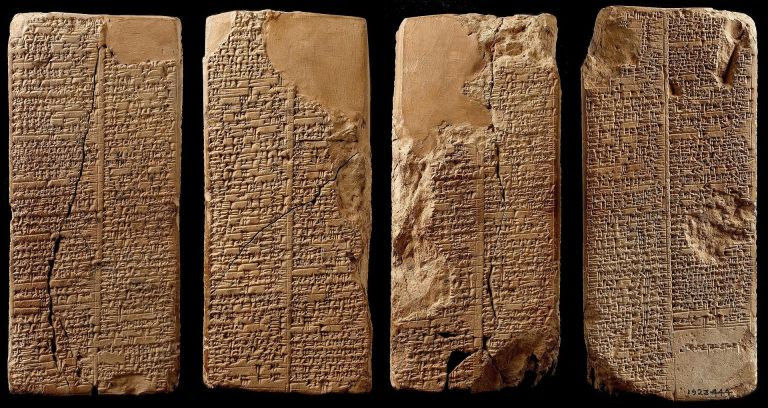
The Cities of His Kingdom Genesis names the beginning of Nimrod’s realm as Babel (near Eridu), Erech (Uruk), Accad (Akkad), and Calneh in Shinar. Sargon conquered Uruk and transformed the obscure city of Akkad into the empire’s glittering capital. The match is exact.
Expansion and Building in Assyria The Bible states that “from that land he went into Assyria and built Nineveh, Rehoboth-Ir, Calah, and Resen.” Sargon and his dynasty extended control northward, with Akkadian artifacts, inscriptions, and building activity uncovered at Nineveh, Ashur, and the region of Calah. He did not merely conquer—he fortified and “built up” these strategic centers.
Legendary Military Prowess and Tyranny Nimrod’s reputation as the archetypal “mighty hunter” fits Sargon’s documented brutality. Victory stelae and obelisks depict mass slaughter and conquest—exactly the “slaughterer before the LORD” described in Genesis. Sargon was the first to weld diverse peoples into a single empire through force.
Lasting Influence and Chronological Fit The prophet Micah later calls Assyria “the land of Nimrod” (Micah 5:6). Sargon introduced administrative systems (including the eponym dating used for centuries in Assyria) that endured. His reign aligns precisely with the rapid rise of civilization Scripture places shortly after the Flood—no evolutionary “slow development” required.
Historical Context: The Post-Flood World
After the Flood waters receded, Noah’s family disembarked on the mountains of Ararat. Within generations, their descendants migrated to the plain of Shinar (Genesis 11:2). With long lifespans and preserved knowledge from the pre-Flood world, civilization exploded. Nimrod/Sargon exemplifies the first centralized power grab: instead of dispersing as God commanded, he consolidated control, built cities, and exalted human rule. His empire set the stage for the Tower of Babel, where humanity united in defiance of God—prompting the confusion of languages and the dispersion that populated the earth.
Profound Implications for Faith and History
This identification is far more than an academic curiosity. It is powerful validation that Genesis 10 records real people, real places, and real events. Skeptics who dismiss the early chapters of the Bible as legend must now reckon with the archaeological record that matches Scripture in astonishing detail. The Bible’s Table of Nations is not folklore—it is the accurate historical framework for all ancient civilizations.
At the Flood Museum, this truth reinforces every exhibit. The same God who judged the world with water and preserved Noah also sovereignly recorded the immediate aftermath through Moses. Nimrod/Sargon reminds us that human pride and empire-building apart from God always lead to judgment (as at Babel). Yet it also points forward to the ultimate King—Jesus Christ—who will one day rule with perfect justice over every nation.
As you walk through our exhibits, remember: the sands of Mesopotamia have spoken. The Bible was right all along. Nimrod was real. Sargon was Nimrod. And God’s Word stands forever as trustworthy history—from the Flood to today.


Comments